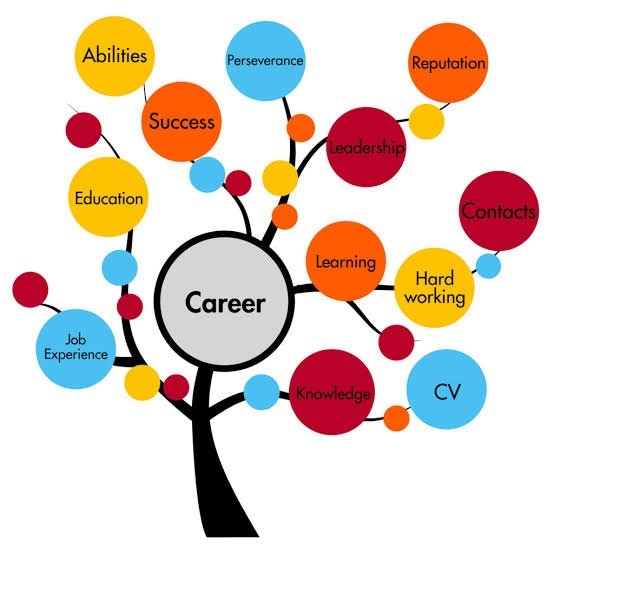
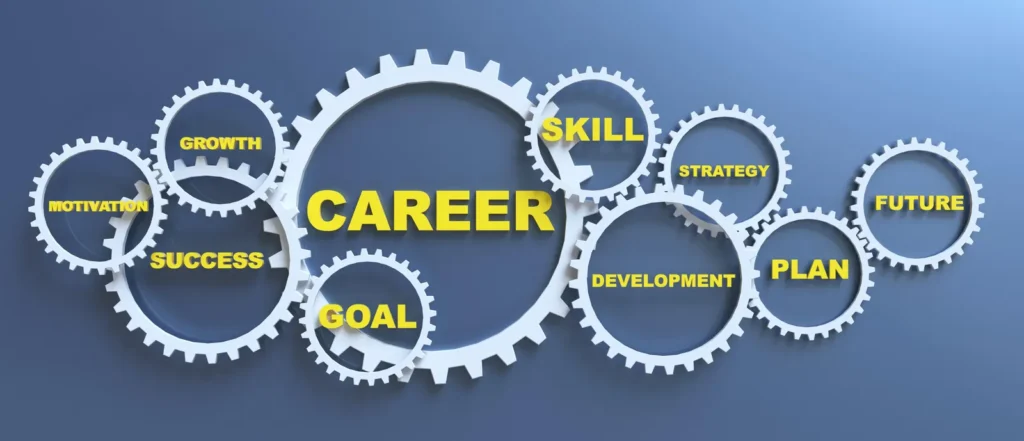
“A confident young professional climbing a modern career growth staircase made of glowing digital steps labeled Skills, Experience, Leadership, Networking, Promotion, and Success. Futuristic office background with business analytics dashboards, AI career assistant holograms, laptop, resume, professional attire, blue and gold corporate theme, ultra-realistic, high-quality 4K, motivational business blog featured image.”
Professional climbing digital career growth steps representing career development and success.
Career development is a lifelong journey of learning, improving skills, and achieving professional goals. Whether you’re a student preparing for your first job, a recent graduate entering the workforce, or an experienced professional seeking career advancement, continuous development is essential in today’s competitive job market.
Technology, automation, artificial intelligence, and changing workplace expectations have transformed the way careers evolve. Employers now value adaptability, communication, leadership, and continuous learning just as much as technical expertise.
This comprehensive guide explains career development, why it matters, essential skills to build, practical strategies for career growth, and how to create a long-term career plan.
What Is Career Development?
That is the continuous process of improving your knowledge, skills, experience, and professional abilities to achieve your career goals.
“Your career grows where learning never stops.”
On an individual basis, career planning encompasses a process in which the individual is self-aware of their personal needs and desires for fulfilment in their personal life, in conjunction with the career they hold. While every person’s experiences are unique, this contributes to the different careers that people will acquire over their lifespan
Why Career Development Is Important
Investing in career development offers long-term benefits.
Benefits Include
Better job opportunities
Higher earning potential
Increased confidence
Professional growth
Greater job satisfaction
Improved leadership skills
Stronger job security
Career flexibility
Continuous improvement helps professionals stay competitive in a rapidly changing workplace.
Stages of Career Development
Self-Assessment
Understand your:
Interests
Strengths
Weaknesses
Values
Career aspirations
Knowing yourself helps you make informed career decisions.
Career Exploration
Research industries, job roles, salary expectations, and required skills.
Explore career options through:
Online research
Career fairs
Networking events
Informational interviews
Skill Development
Develop both technical and soft skills.
Examples include:
Communication
Problem-solving
Leadership
Data analysis
Project management
Digital literacy
Career Advancement
As you gain experience, focus on:
Promotions
Leadership roles
Certifications
Specialized expertise
Lifelong Learning
Successful professionals continue learning throughout their careers.
This may include:
Online courses
Workshops
Industry certifications
Professional conferences
Reading books and articles
Essential Skills for Career Development
Communication Skills
Strong communication improves teamwork, leadership, and customer relationships.
Practice:
Active listening
Public speaking
Professional writing
Presentation skills
Leadership Skills
Leadership isn’t limited to managers.
Develop:
Decision-making
Responsibility
Team motivation
Conflict resolution
Problem-Solving
Employers value professionals who can identify challenges and develop practical solutions.
Adaptability
Technology and workplace expectations evolve quickly.
Being open to learning and change makes you more resilient.
Time Management
Prioritize tasks, meet deadlines, and stay organized to improve productivity.
Emotional Intelligence
Understanding and managing emotions helps build stronger workplace relationships and improves collaboration.
Create a Plan
Define Your Career Goals
Examples:
Get promoted
Change industries
Learn a new skill
Start a business
Become a manager
Set goals that are realistic and measurable.
Identify Skill Gaps
Compare your current skills with those required for your desired role.
Create a learning plan to close those gaps.
Build Your Professional Network
Networking can open doors to new opportunities.
Connect with:
Colleagues
Mentors
Industry professionals
Alumni
Professional organizations
Maintain genuine relationships over time.
Gain Practical Experience
Look for opportunities to:
Volunteer for new projects
Take on additional responsibilities
Participate in cross-functional teams
Mentor others
Practical experience strengthens your resume and confidence.
Review Progress Regularly
Evaluate your goals every few months.
Celebrate achievements and adjust your plan as your interests or circumstances evolve.
Tips for Career Growth
Continue Learning
Stay updated with industry trends and emerging technologies.
Seek Feedback
Constructive feedback from managers and colleagues can help identify areas for improvement.
Build a Strong Personal Brand
Maintain a professional online presence, share your expertise, and highlight your achievements.
Improve Your Resume
Keep your resume updated with:
New skills
Certifications
Projects
Accomplishments
Tailor it for each job application.
Prepare for Interviews
Practice answering common interview questions and be ready to discuss your experience and achievements with confidence.
Common Mistakes
Avoid these mistakes
Not setting career goals
Ignoring skill development
Avoiding networking
Resisting change
Neglecting work-life balance
Waiting too long to ask for feedback
Staying in your comfort zone indefinitely
Recognizing these habits early can help you continue progressing.
The Age of AI
Artificial intelligence is reshaping many industries.
To stay competitive:
Learn digital skills
Understand AI tools relevant to your field
Strengthen creativity and critical thinking
Develop leadership and communication skills
Stay adaptable
Combining technical knowledge with human skills can improve long-term career resilience.
Daily Habits for Professional Success
Read industry news
Learn one new skill each week
Network with professionals
Keep a career journal
Review your goals
Ask thoughtful questions
Maintain a positive attitude
Take care of your physical and mental health
Small, consistent habits often lead to significant long-term growth.
What is career development?
Career-development is the ongoing process of improving your skills, knowledge, and experience to achieve professional goals and adapt to changing career opportunities.
Important
It helps increase employability, improve job performance, prepare for promotions, and support long-term professional growth.
How can I grow my career faster?
Set clear goals, develop relevant skills, seek feedback, build professional relationships, gain practical experience, and continue learning throughout your career.
Skills are most important for career success
Communication, leadership, adaptability, problem-solving, emotional intelligence, digital literacy, and time management are valuable across many professions.
How often should I update my career plan?
Review your career plan at least once or twice a year, or whenever your goals, industry, or personal circumstances change.
Conclusion
Career development is not a one-time achievement—it’s an ongoing journey of learning, adapting, and growing. By setting clear goals, building in-demand skills, expanding your professional network, and embracing continuous learning, you can create a rewarding and resilient career.
Remember, success is built through consistent effort. Every course you complete, every skill you develop, and every meaningful connection you make brings you one step closer to your long-term professional goals.
SEO Keywords: Career-Development, Professional Growth, Career Success, Skill Development, Career Planning, Leadership Skills, Career Opportunities
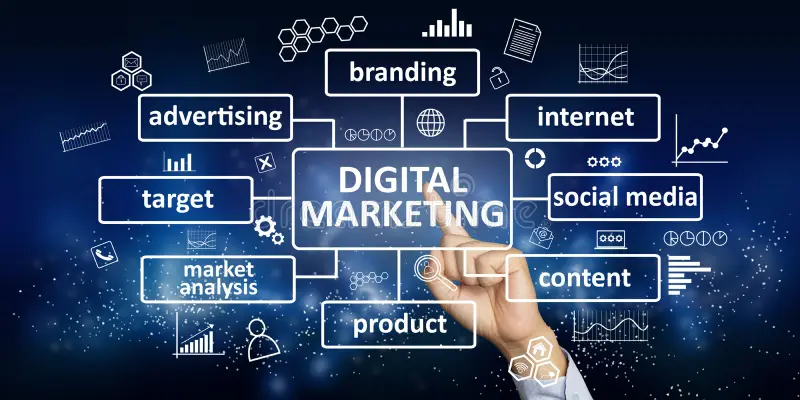
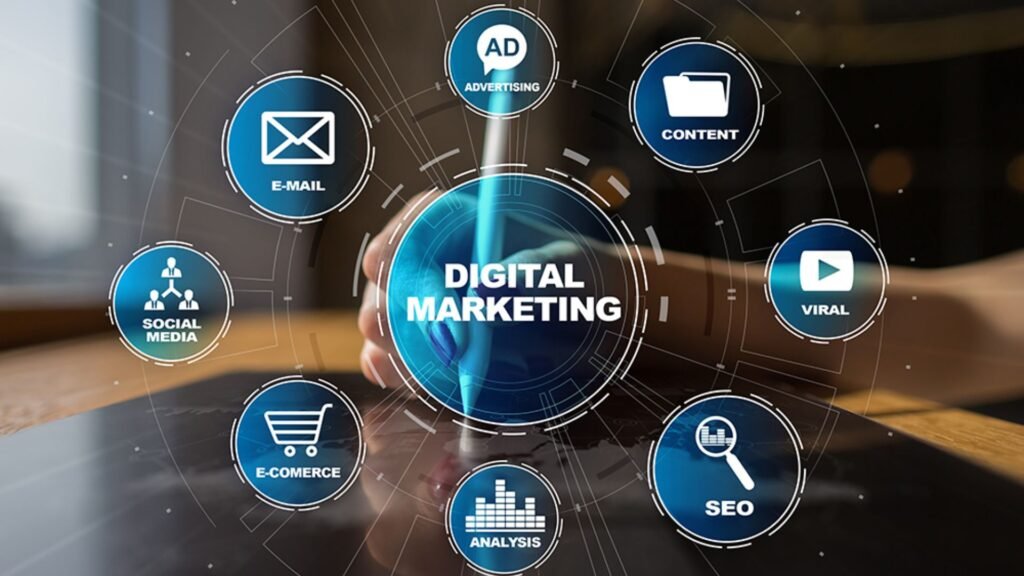
“A futuristic digital-marketing workspace featuring a laptop with SEO analytics dashboard, social media icons, email marketing campaigns, PPC advertising charts, AI-powered marketing automation, holographic data visualization, smartphone displaying social media analytics, modern office setup, blue and purple technology theme, ultra-realistic, professional blog featured image, 4K resolution.”
Image Alt Text
Modern digital marketing workspace with SEO dashboard, social media analytics, email marketing, and AI-powered business growth tools.
The Complete Beginner’s Guide
In today’s digital world, businesses no longer rely only on newspapers, television, or radio advertisements to reach customers. Instead, they use digital platforms such as search engines, social media, websites, email, and mobile applications to connect with their target audience. This approach is known as digital-marketing.
Digital Marketing: The Smart Way to Grow Your Business
Description: Discover how digital marketing helps businesses reach the right audience, increase brand awareness, and drive sales through modern online strategies.
Introduction
Digital marketing has completely changed the way businesses connect with their customers. In today’s fast-moving digital world, people spend most of their time online—on search engines, social media platforms, websites, and mobile apps. This shift has created a powerful opportunity for businesses to promote their products and services more effectively than traditional marketing methods.
Whether you are running a small startup or managing a large company, digital marketing provides cost-effective, scalable, and measurable ways to grow your brand. Unlike offline advertising, where results are often uncertain, online marketing allows you to track every click, view, and conversion in real time.
What is Digital-Marketing?
Digital marketing refers to all marketing efforts that use the internet or electronic devices. It includes strategies like search engine optimization (SEO), social media marketing, email campaigns, content creation, and paid advertising.
The main goal of digital marketing is simple: 👉 Reach the right audience at the right time with the right message.
This makes it one of the most powerful tools for modern business growth.
Why -Matters
In the past, businesses relied heavily on newspapers, TV ads, and billboards. While these methods still exist, they are expensive and difficult to measure. Digital marketing solves these problems by offering precision and performance tracking.
Here’s why it matters:
🎯 Targeted Reach: You can show ads to specific age groups, locations, and interests.
📊 Measurable Results: Every campaign can be tracked and analyzed.
💰 Cost-Effective: Even small businesses can compete with large brands.
🤝 Better Engagement: Direct interaction with customers builds trust.
🚀 Faster Growth: Campaigns can be optimized instantly for better results.
Key Strategies
A successful online presence is built using multiple strategies working together. Let’s explore the most important ones:
Search Engine Optimization (SEO.)
SEO helps your website appear on search engines like Google. When users search for products or services, Social Media Marketing ensures your business shows up in the top results. This increases visibility and organic traffic without paying for ads.
Content Marketing
Content is the foundation of digital marketing. Blogs, videos, infographics, and guides help educate your audience and build authority in your industry. High-quality content also improves SEO rankings.
Social Media Marketing
Platforms like Facebook, Instagram, LinkedIn, and X (Twitter) allow businesses to connect directly with their audience. Social media helps build brand awareness, increase engagement, and drive traffic to your website.
Email Marketing
Email marketing is one of the most powerful tools for customer retention. It allows businesses to send personalized messages, offers, and updates directly to users’ inboxes.
Pay-Per-Click Advertising (PPC)
PPC advertising allows businesses to display ads on search engines and only pay when someone clicks on them. It is a fast way to generate traffic and leads.
Influencer Marketing
Collaborating with influencers helps brands reach a larger and more engaged audience. Influencers build trust, which increases the chances of conversions.
Benefits of (Digital-Marketing)
Digital marketing offers several long-term advantages for businesses of all sizes:
🌍 Global Reach: Connect with customers worldwide
📈 Higher ROI: Better returns compared to traditional marketing
🧠 Data-Driven Decisions: Improve strategies using analytics
💡 Customer Insights: Understand user behavior and preferences
These benefits make digital marketing essential in today’s competitive business environment.
How Digital-Marketing Helps Business Growth
this is not just about advertising—it is about building relationships and trust. When customers see your brand consistently online, they are more likely to trust your products or services.
For example:
A well-optimized website brings organic traffic daily
Social media posts keep your audience engaged
Email campaigns convert leads into loyal customers
Paid ads bring instant visibility and sales
Together, these strategies create a complete growth system for any business.
Common Mistakes to Avoid
Many businesses fail in digital marketing because of simple mistakes:
❌ Not defining a target audience
❌ Ignoring SEO optimization
❌ Posting inconsistent content
❌ Not analyzing performance data
❌ Overusing paid ads without strategy
Avoiding these mistakes can significantly improve your results.
Future of Digital-Marketing
The future of this is driven by technology. Artificial intelligence, automation, voice search, and personalized content are shaping the next generation of marketing strategies.
Businesses that adapt to these changes early will have a strong competitive advantage. Personalization and user experience will become even more important in the coming years.
Conclusion
Digital-marketing is no longer optional—it is essential for business success. It provides powerful tools to reach customers, build trust, and increase sales in a highly competitive market.
Companies that invest in smart digital strategies can grow faster, reach wider audiences, and build stronger brands.
Final Thought: “It was turns clicks into customers and ideas into success.”
FAQ
1. What is DG.MARKET in simple words?
This is promoting products or services using the internet and online platforms.
2. Is D-MARKET good for small businesses?
Yes, it is one of the most cost-effective ways for small businesses to grow and reach customers.
3. Which is the most important part of digital marketing?
SEO and content marketing are considered the foundation of digital marketing success.
4. How long does it take to see results?
SEO may take 3–6 months, while paid ads can show results instantly.
✅ Positive Sentiment (Recommended)
Because the article focuses on:
Benefits of digital marketing
Business growth
Opportunities
Success strategies
Helpful tips
Negative Sentiment
Mistakes
Cybersecurity Threats
Online Scams
AI Risks
Marketing Failures
SEO Keywords
Digital-Marketing, Social Media Marketing, Content Marketing, Email Marketing, Online Advertising, Business Growth, PPC, Influencer Marketing, Online Marketing Strategies
As our lives become increasingly connected through the internet, cybersecurity has become more important than ever. From online banking and shopping to remote work and social media, we share a significant amount of personal and financial information online. While digital technology offers convenience, it also exposes individuals and businesses to cyber threats.
Cybersecurit
Cybersecurity: The Complete Guide to Protecting Your Digital Life
As our lives become increasingly connected through the internet, cyber security has become more important than ever. From online banking and shopping to remote work and social media, we share a significant amount of personal and financial information online. While digital technology offers convenience, it also exposes individuals and businesses to cyber threats.
Cyber security is the practice of protecting computers, smartphones, networks, and sensitive data from unauthorized access, cyberattacks, and digital fraud. Whether you’re a student, professional, entrepreneur, or casual internet user, understanding basic cybersecurity practices can help protect your identity, finances, and privacy.
This comprehensive guide explains what cybersecurity is, why it matters, common cyber threats, and practical steps to stay safe online.
What Is Cybersecurity?
Cybersecurity refers to the technologies, processes, and best practices used to protect digital systems, networks, and information from cyber threats.
It helps safeguard:
Personal information
Financial data
Business records
Emails
Cloud storage
Websites
Mobile devices
Computer systems
The goal of cybersecurity is to reduce the risk of data theft, fraud, and system compromise.
Why Cybersecurity Is Important
Every day, millions of people use the internet for communication, education, shopping, entertainment, and work. Without proper security measures, cybercriminals may attempt to steal sensitive information or disrupt digital services.
Benefits of Strong Cybersecurity
Protects personal information
Prevents identity theft
Reduces the risk of financial fraud
Keeps devices secure
Safeguards business data
Improves online privacy
Builds trust in digital services
Common Types of Cyber Threats
1. Phishing Attacks
Phishing is a scam where attackers pretend to be trusted organizations through emails, text messages, or fake websites to trick users into revealing passwords or financial information.
Warning Signs
Urgent requests for personal information
Suspicious links
Poor grammar or spelling
Unknown email addresses
2. Malware
Malware is malicious software designed to damage devices or steal information.
Examples include:
Viruses
Worms
Spyware
Trojans
Installing trusted software and keeping systems updated helps reduce the risk.
3. Ransomware
Ransomware encrypts files and demands payment to restore access.
Prevention Tips
Back up important files regularly.
Keep software updated.
Avoid downloading unknown attachments.
4. Password Attacks
Weak or reused passwords make it easier for attackers to gain access to online accounts.
Best Practices
Use long, unique passwords.
Avoid personal information.
Consider using a password manager.
5. Social Engineering
Social engineering manipulates people into revealing confidential information through deception rather than technical attacks.
Always verify requests before sharing sensitive data.
Essential Cybersecurity Best Practices
1. Use Strong, Unique Passwords
A strong password should:
Be at least 12–16 characters long.
Include uppercase and lowercase letters.
Include numbers and symbols.
Be unique for every account.
2. Enable Two-Factor Authentication (2FA)
Two-factor authentication adds an extra layer of protection by requiring a second verification step in addition to your password.
This significantly reduces the risk of unauthorized access.
3. Keep Software Updated
Software updates often include security patches that fix known vulnerabilities.
Update:
Operating systems
Browsers
Apps
Antivirus software
Enable automatic updates whenever possible.
4. Be Careful with Public Wi-Fi
Public Wi-Fi networks may not always be secure.
If using public Wi-Fi:
Avoid accessing sensitive accounts when possible.
Use trusted, encrypted connections where available.
Verify the network before connecting.
5. Back Up Important Data
Regular backups help you recover files in case of hardware failure, ransomware, or accidental deletion.
Use:
External hard drives
Cloud backup services
Follow a consistent backup schedule.
6. Install Reliable Security Software
Security software can help detect and block many common threats.
Look for features such as:
Malware detection
Real-time protection
Firewall
Safe browsing alerts
7. Think Before You Click
Before clicking a link or downloading an attachment:
Check the sender.
Verify the website address.
Avoid unexpected downloads.
When in doubt, visit the official website directly instead of using links from unsolicited messages.
Cybersecurity for Businesses
Organizations should also adopt good security practices.
Important Measures
Employee security awareness training
Regular software updates
Data encryption
Strong access controls
Regular backups
Incident response planning
Human awareness is a key part of organizational cybersecurity.
Cybersecurity for Students
Students often use online learning platforms, cloud storage, and email services.
Helpful habits include:
Protecting account passwords
Avoiding suspicious downloads
Using secure networks
Backing up assignments
Keeping devices updated
Cybersecurity for Remote Workers
Working remotely introduces additional security considerations.
Best Practices
Secure your home Wi-Fi with a strong password.
Lock your computer when away.
Keep work and personal accounts separate when appropriate.
Follow your employer’s security policies.
Common Cybersecurity Mistakes to Avoid
Reusing passwords
Ignoring software updates
Clicking unknown links
Downloading software from untrusted sources
Sharing sensitive information publicly
Using unsecured Wi-Fi for sensitive activities
Disabling security features without good reason
Avoiding these habits can significantly reduce your exposure to cyber threats.
Future of Cybersecurity
Cybersecurity continues to evolve as technology advances.
Key trends include:
AI-assisted threat detection
Zero Trust security models
Cloud security improvements
Biometric authentication
Internet of Things (IoT) security
Privacy-enhancing technologies
Security awareness education
Staying informed and adapting to new best practices will remain essential.
Frequently Asked Questions (FAQs)
What is cybersecurity?
Cybersecurity is the practice of protecting digital systems, devices, networks, and information from unauthorized access, cyberattacks, and data theft.
Why is cybersecurity important?
It helps protect personal information, financial accounts, business data, and online privacy while reducing the risk of cybercrime.
What is the biggest cybersecurity threat?
There is no single biggest threat, but phishing, malware, ransomware, and weak passwords remain among the most common risks for individuals and organizations.
How can I improve my online security?
Use strong passwords, enable two-factor authentication, keep software updated, avoid suspicious links, and back up important data regularly.
Can small businesses be targeted by cyberattacks?
Yes. Businesses of all sizes can be targeted, which is why security awareness, regular updates, backups, and access controls are important.
Conclusion
Cybersecurity is no longer just an IT concern—it’s a daily responsibility for anyone using digital devices and online services. By understanding common cyber threats and following practical security habits, you can better protect your personal information, finances, and digital identity.
Good cybersecurity starts with simple actions: using strong passwords, enabling two-factor authentication, updating software, being cautious with emails and links, and backing up your important data. These habits can greatly reduce your risk and help you navigate the digital world with greater confidence.
AI automation is reshaping how businesses operate by streamlining tasks, reducing manual effort, and increasing efficiency. By automating repetitive processes and enhancing decision-making, AI helps organizations achieve greater speed, accuracy, and innovation.
Key takeaways
AI automation uses artificial intelligence—such as machine learning and natural language processing—to perform routine tasks and streamline processes.
It supports various business functions including customer service, marketing, supply chain management, and human resources.
The approach improves operational efficiency, reduces errors, and cuts costs while empowering teams to focus on strategic goals.
AI automation helps leaders make informed choices and anticipate business needs.
It drives innovation and growth by freeing up capacity for creative exploration, new products, and services.
Ethical AI practices and robust data privacy measures are essential to maintaining trust and ensuring responsible implementation.
AI solutions offer scalable and adaptable systems that evolve with changing market conditions, unlike outdated, rigid technologies.
Definition
What is AI automation?
AI automation refers to the use of artificial intelligence to perform tasks, act, or streamline processes that would otherwise require human effort. It combines automation technologies with AI capabilities like natural language processing, machine learning, and computer vision to help organizations operate more efficiently and effectively.
At its core, AI helps people do more with less by reducing repetitive work, improving accuracy, and creating space for higher-value thinking. Instead of replacing human judgment, AI and automation both enhance it. As organizations face pressure to innovate and scale, AI automation provides a foundation for smarter, faster, and more consistent operations.
Implementing AI automation is both a technical and strategic challenge. Businesses that understand and apply AI automation in a thoughtful way are often better equipped to adapt, grow, and lead in a changing landscape.
Benefits
Why use AI automation?
AI automation creates both immediate and lasting value across your organization. Some of the key benefits include:
Increased efficiency. AI automation helps people complete routine work faster—whether it’s processing documents, analyzing large volumes of data, or responding to customer inquiries. This frees up time for more strategic, creative, and interpersonal tasks.
Improved accuracy. AI systems are consistent in how they follow rules, detect anomalies, and flag issues. This reduces manual errors and helps teams make more confident decisions with less rework.
Cost savings. Automating repetitive workflows lowers operational costs by minimizing the need for manual oversight and reducing downtime. These savings can be reinvested into growth and innovation.
Greater scalability and flexibility. AI automation makes it easier to scale operations and adapt to new business needs without requiring major process overhauls.
Better customer experiences. Faster response times, personalized interactions, and consistent service all contribute to stronger customer satisfaction and loyalty.
The advantages of AI automation add up quickly to create a more responsive, resilient, and future-ready organization.
Use cases
Key applications of AI automation
AI automation transforms how work gets done across core business functions. Integrating AI-powered tools into everyday processes spreads the benefits across the organization.
Here are a few key areas where AI automation is making an impact.
Customer service: AI-powered chatbots and virtual agents help teams respond to customer inquiries around the clock. Resolve common issues, escalate complex cases, and provide consistent support across channels with these tools. helps agents find answers faster and personalize responses based on real-time context.
Marketing: Using AI to segment audiences, personalize content, and run campaigns brings accuracy and efficiency to marketing departments. Tools like Insights analyze customer data to surface insights and trigger automated workflows so marketing teams reach the right audience with the right message at the right time.
Supply chain management: AI helps improve visibility, anticipate disruptions, and optimize logistics, making it easier to adapt to changing supply chain conditions and needs. AI-powered capabilities for example, support demand forecasting, inventory tracking, and supplier coordination—helping organizations build smoother, more adaptive supply chains.
Human resources: AI automation supports recruiting, onboarding, and employee engagement. AI-assisted tools help HR teams identify qualified candidates, streamline routine tasks, and create more personalized employee experiences.
IT operations: AI automation helps IT departments reduce manual effort, improve service reliability, and manage complex environments more efficiently. One approach is hyperautomation—a strategy that combines AI, low-code tools, and robotic process automation to automate as many business and IT processes as possible. Hyperautomation solutions help streamline IT workflows, including ticket triage, user provisioning, and system monitoring and maintenance.
Across departments, AI gives people better tools to do their best work—without replacing human decision-making. By automating routine tasks and surfacing insights when they’re needed most, AI helps teams stay focused on what matters.
AI in customer service
Enhancing customer experiences with AI
People want fast, personalized, and consistent interactions—on their terms. AI automation helps meet those expectations by making customer experiences more responsive, relevant, and intuitive.
AI-powered tools like chatbots, virtual assistants, and AI agents handle common questions, guide people through complex tasks, and escalate issues to human agents when needed. These tools are always on and always learning, which helps improve service quality over time. AI agents are often built to work alongside support professionals—gathering context, recommending actions, and helping resolve issues more quickly. For example, support teams provide faster, more accurate responses with helpful summaries, suggested replies, and real-time knowledge lookup with Copilot in Dynamics 365 Customer Service.
Predictive analytics also plays a key role. By analyzing patterns in customer behavior, AI helps identify what a customer might need before they ask—whether it’s a follow-up message, a service reminder, or a product recommendation. This kind of proactive support helps build trust and loyalty.
AI automation improves customer experiences with:
Faster resolution times, thanks to 24/7 virtual support.
More personalized interactions based on real-time insights.
Smarter service routing to match customers with the right resources.
Proactive outreach that anticipates needs and follows up automatically.
AI in decision making
Making decisions backed by data
Modern businesses generate more data than ever before; making sense of that data can be a challenge. AI automation helps transform raw data into clear, actionable insights that support faster, more confident decision-making across the organization.
With AI-powered apps, teams analyze large volumes of structured and unstructured data in real time. These tools identify trends, uncover hidden patterns, and surface insights that might otherwise be missed. Rather than relying on manual reporting or gut instinct, decision-makers act on evidence that’s grounded in what’s actually happening across systems, teams, and customers.
Predictive analytics is a key part of this approach. AI models use historical data to forecast future outcomes, helping teams anticipate needs, allocate resources more effectively, and reduce risk. In fields like supply chain management, sales forecasting, and customer retention, predictive analytics gives organizations a competitive edge.
With AI, organizations can expect:
More accurate forecasts that help teams plan with confidence.
Faster reporting cycles with real-time dashboards and visualizations.
Proactive alerts that flag issues before they become problems.
Better resource allocation based on demand patterns or performance data.
AI automation helps with decision making in two ways: speeding up analysis and raising the quality of the insights available to decision-makers. By connecting data across departments and presenting it in context, AI helps leaders focus on what matters most and take action with clarity.
AI in operations
Operational efficiency and automation
AI automation is a practical way to streamline operations and reduce the burden of repetitive, manual work. It helps people and businesses move faster, work smarter, and stay consistent—especially when paired with tools like robotic process automation (RPA) and intelligent workflows.
RPA uses bot software to mimic repetitive human actions like data entry, system updates, or invoice processing. When combined with AI, bots become more adaptable and capable of handling exceptions, learning from patterns, and improving over time. Intelligent workflows take this a step further by connecting systems, data, and decision-making across departments.
Here’s what that looks like in action:
Finance teams use AI to automate invoice matching, fraud detection, and financial reporting.
Operations teams create intelligent workflows that route tasks automatically and trigger alerts when exceptions occur.
IT teams reduce support ticket volume by automating common system checks and troubleshooting steps.
Businesses that adopt AI automation often see faster turnaround times, fewer errors, and more time for high-impact work.
A guide to getting started with AI automation
A thoughtful approach makes AI automation easier to implement. Here’s a simple path to follow to build your business with AI:
Identify high-volume, repetitive tasks that follow clear rules.
Choose the right tools based on the complexity of the task—like RPA for structured workflows and AI-powered tools for tasks involving judgment or variability.
Start with a pilot project in a single team or department to test outcomes and refine the approach.
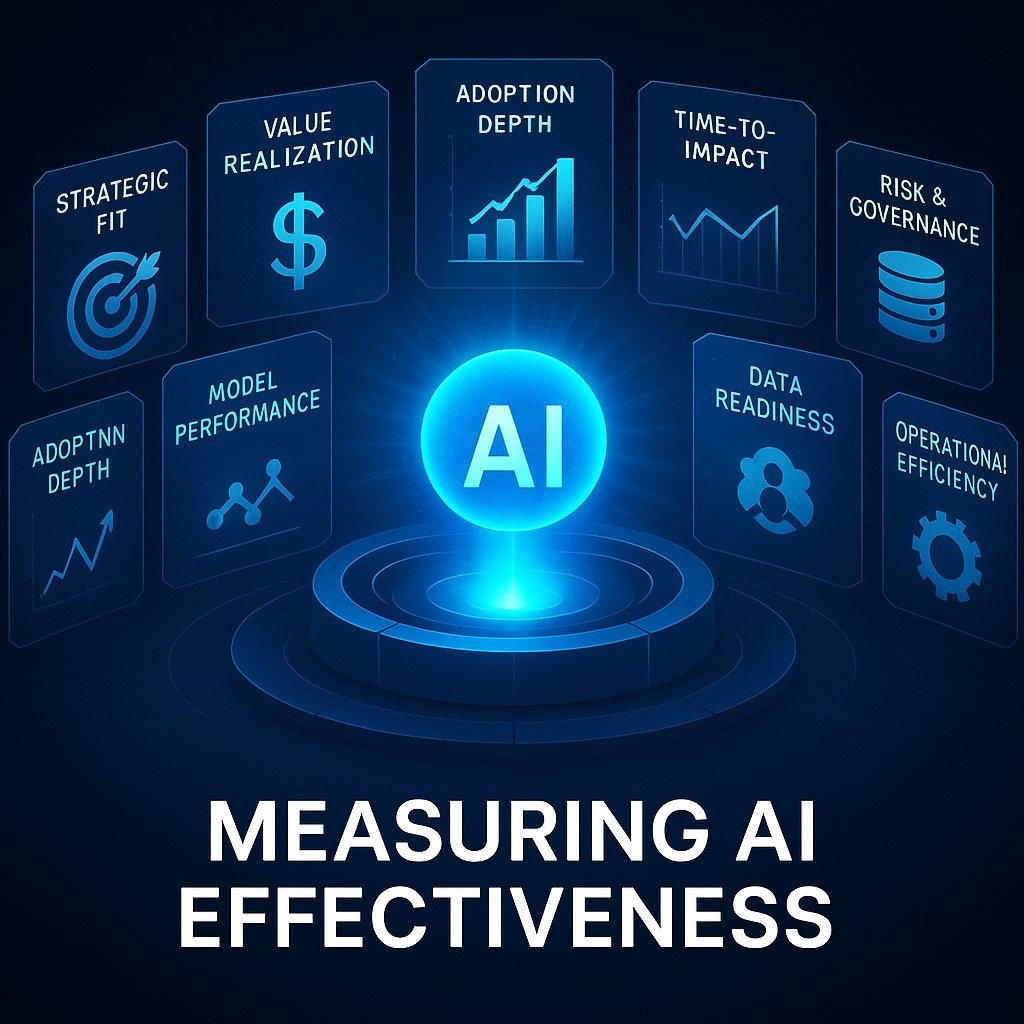
Measure impact by tracking time savings, error rates, and employee feedback.
Expand gradually as teams gain confidence and new opportunities emerge.
The most successful implementations focus on solving real problems, not just adopting technology for its own sake. When AI automation is introduced thoughtfully, it empowers people to do their jobs better and builds momentum for broader innovation.
For a deeper look at how IT leaders are guiding successful AI adoption across their organizations, read the e-book The CIO’s Advantage: Faster Innovation with AI and Low Code.
Industry impacts
Innovation and growth with AI
By removing barriers to scale, speeding up experimentation, and uncovering new insights, AI makes space for organizations to rethink how they operate and what they offer.
Across industries, AI automation is helping leaders explore entirely new business models, products, and services. Here’s how different sectors are using AI to drive innovation:
1. Retail
Personalized product recommendations based on real-time customer behavior
Automated inventory management that adapts to changing demand
AI-powered agents that support guided shopping experiences
2. Healthcare
Faster analysis of medical imaging to support early diagnosis
AI-assisted triage and symptom-checking tools for patients
Automated administrative workflows to reduce paperwork and improve the flow of care for patients
3. Manufacturing
Predictive maintenance that helps prevent equipment failures
AI-assisted quality control through image recognition and pattern analysis
Smarter production planning using real-time supply chain and demand data
4. Financial services
Fraud detection based on AI models that flag unusual activity
Personalized financial recommendations for customers at scale
Automated compliance checks to improve audit readiness
Innovation doesn’t always mean large-scale disruption. Often, it starts with small changes—testing new ideas, improving workflows, or uncovering new insights. AI automation helps teams move faster and bring ideas to life with less risk and more clarity.
By reducing the manual load and expanding what’s possible with data, AI creates space for meaningful progress—whether that’s improving customer experiences, launching new services, or exploring entirely new ways of working.
Scalability
How modern AI solutions grow alongside your business
As business needs evolve, the tools supporting them need to keep up. AI automation offers a level of scalability that traditional systems simply weren’t built for. It adapts quickly, integrates easily with modern platforms, and continues to improve over time as it learns from new data.
Unlike legacy systems that often rely on fixed rules, manual updates, or hardcoded workflows, AI business solutions are designed to grow alongside the organization. They respond to new inputs, scale workloads automatically, and adapt to changing conditions without requiring a complete system overhaul.
AI automation supports flexible, scalable operations by helping to:
Manage dynamic workloads that scale automatically based on usage, whether you’re processing 10 requests or 10,000.
Adapt to change through models that can be retrained or refined as new priorities, regulations, or customer needs emerge.
Integrate with cloud platforms to make expansion across teams, regions, or business units faster and more seamless.
In contrast, outdated automation tools often struggle with:
Rigid configurations that require IT support for every change.
Limited integration across modern systems or data sources.
Slower response times when faced with unexpected demand.
AI automation gives businesses the flexibility to experiment, expand, and adapt—without the friction of traditional tools. Whether you’re scaling a single process or transforming a global operation, AI provides a foundation that evolves with you.
Responsible AI
Ethical AI and data privacy
Ethical practices and strong data privacy protections are foundational to maintaining trust with customers, employees, and partners. As AI automation becomes more integrated into daily operations, it’s essential to build and use these systems responsibly.
Responsible AI starts with transparency. That means designing systems that are understandable, fair, and accountable. AI-powered tools should support—not replace—human judgment. They should reflect ethical values, avoid bias, and operate within clear boundaries that protect individuals and society.
Data privacy is just as critical. AI systems rely on large volumes of data to function effectively and protecting that data—especially personal or sensitive information—is nonnegotiable. Organizations need to ensure that their AI implementations comply with regional and industry-specific regulations, such as the General Data Protection Regulation.
To build ethical, privacy-conscious AI solutions, organizations should:
Use high-quality, representative data to reduce bias in AI outputs.
Design for transparency so everyone understands how decisions are made.
Maintain human oversight over automated processes, especially in high-impact areas.
Secure data throughout its lifecycle with governance, access controls, and encryption.
Stay current with evolving regulations and adjust practices to remain compliant.
When AI is developed and applied responsibly, it builds confidence—not just in the technology, but also in the integrity of the organization using it.
Microsoft takes a principles-based approach to responsible AI, grounded in fairness, reliability and safety, privacy and security, inclusiveness, transparency, and accountability.
Challenges
The challenges of AI automation—and how to overcome them
While the benefits of AI automation are clear, many organizations still face practical challenges when getting started. These aren’t roadblocks—they’re part of the process. With the right strategy and support, it’s possible to address AI challenges in ways that lead to more sustainable and successful outcomes.
Some of the most common challenges include:
High implementation costs. Upfront investments in tools, infrastructure, or change management can feel daunting—especially for smaller teams or organizations.
Integration with existing systems. Many businesses rely on legacy software, making it difficult to connect new AI solutions without disrupting operations.
Lack of AI expertise. Building, deploying, and managing AI systems often requires specialized skills that may not be readily available in-house.
Here’s how organizations successfully work through these challenges:
Start small and scale gradually. Pilot projects allow teams to test AI automation in a focused area, measure outcomes, and refine the approach before expanding more broadly.
Choose flexible, interoperable tools. Look for AI platforms designed to integrate with your existing systems, using standard APIs and connectors to avoid major rework. To learn more about how low-code solutions can support flexibility at scale, Invest in training and partnerships. Upskilling internal teams and working with technology partners helps close knowledge gaps and accelerate adoption. Microsoft offers a variety of learning resources and certifications to support AI readiness, for example.
Focus on business outcomes. Ground your implementation in a clear understanding of the problems you’re solving. This helps prioritize the right use cases and build support across teams.
Every organization’s path to AI automation looks different. What matters most is creating a foundation that’s thoughtful, adaptable, and aligned with your broader goals.
Success stories
The real-world impact of AI automation
Organizations across industries are already seeing measurable results—like increased efficiency and significant cost savings—from their use of AI automation. Here are just a few stories from real Microsoft customers that show how AI helps businesses adapt, scale, and deliver better outcomes.
ERGO Insurance, based in Greece, introduced an AI-powered virtual assistant named Χαρά (Joy) using Microsoft Azure. The assistant helps customers renew policies, make payments, and get 24/7 support—automating 60% of incoming inquiries. This shift improved customer satisfaction and freed up staff to handle more complex cases. “Achieving 85 percent customer satisfaction rate for dialogues initiated through the Virtual Agent is a great sign. It shows that our users are happy with these interactions,” said Rea Theleriti, Chief Customer and Digital Transformation Officer of ERGO Greece.
The Hanover Insurance Group launched an Enterprise Automation Practice to drive consistent, scalable AI automation across the business. “Our goal was to build a culture of innovation,” said Mukul Talwar, VP of Automation Strategy and Services. Using Microsoft Power Automate, they automated dozens of time-consuming processes across underwriting, claims, and customer service. In just 18 months, the team delivered over 100 automation projects—improving speed, reducing manual errors, and empowering employees to focus on higher-value work.
The University of Hong Kong (HKU) improved faculty efficiency and student support by adopting Microsoft 365 Copilot and Copilot Studio. Faculty use Copilot to streamline administrative tasks, analyze performance data, and personalize course content for hybrid learning. In August 2024, HKU launched the First-Year UG Copilot—an AI-powered agent built with Copilot Studio—to assist new students with academic inquiries, reducing faculty workload and improving the onboarding experience. “Microsoft 365 Copilot provides a secure and comprehensive GenAI solution,” said Flora Ng, Chief Information Officer and University Librarian. “Microsoft Copilot Studio enables our IT team to create customized bots capable of handling large volumes of queries simultaneously.”
Emerging trends
Future trends in AI automation
AI automation is evolving quickly, creating new possibilities for how work gets done. As tools become more intelligent, adaptive, and collaborative, they’re shaping a future in which people and technology work even more closely together.
One major shift is the rise of autonomous AI—systems that manage entire workflows or make context-aware decisions with minimal human input. These tools are built to handle complex, dynamic environments and adjust their actions based on changing conditions. In areas like logistics, cybersecurity, and operations, autonomous AI is already helping businesses respond faster and operate more reliably.
Generative AI is also changing the landscape. These models create content, summarize information, write code, or assist in decision-making, which makes them useful across a wide range of industries and roles. When integrated into AI automation, generative tools support faster documentation, more personalized communication, and smoother collaboration across teams.
AI agents are shaping the next wave of automation by blending autonomous capabilities with generative intelligence. They combine generative reasoning with task execution, enabling them to interpret intent, respond in natural language, and take action across systems. AI agents are already helping teams automate multi-step workflows, support customers, and reduce the manual burden on IT and operations staff—while keeping humans in control.
Looking ahead, several other trends are shaping the next wave of AI automation, including:
Industry-specific AI solutions tailored to unique challenges in sectors like energy, education, and healthcare.
Context-aware systems that understand intent and adjust to people’s behavior.
Low-code and no-code platforms that make solution-building more accessible to nontechnical employees.
AI governance tools that support transparency, monitoring, and control at scale.
“Take care of yourself first—everything else grows from there.”
Description: Discover why prioritizing your needs is essential for personal growth, better decision-making, and a healthier, more balanced life.
Putting your needs first is not selfish—it’s an important part of living a healthy and fulfilling life. When you take care of your physical, mental, and emotional well-being, you have more energy and focus to achieve your goals and support others. Setting boundaries, making time for yourself, and choosing what truly matters help reduce stress and improve confidence.
Prioritizing your needs allows you to make better decisions and maintain a balanced lifestyle. Whether it’s taking a break, learning a new skill, or focusing on your health, every small step contributes to long-term happiness and success.
Conclusion: When you value yourself, you build a stronger foundation for a happier and more successful future.
Creative Quote: “Take care of yourself first—everything else grows from there.”
SEO Keywords: Self-Care, Personal Growth, Mental Wellness, Healthy Lifestyle, Self-Improvement, Life Balance
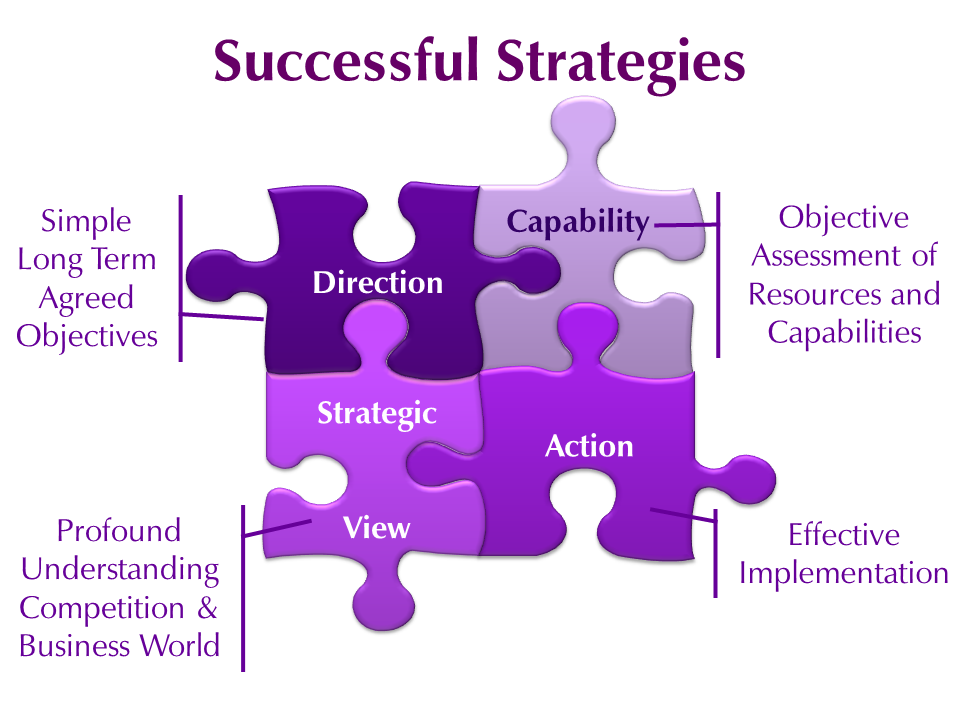
Success Starts With Strategy. A well-defined strategy serves as the cornerstone of any thriving business, enabling leaders to navigate complexities and seize opportunities. By prioritizing careful planning, organizations can establish a clear roadmap that fosters sustainable growth and resilience in an ever-evolving marketplace. Ultimately, aligning operational efforts with strategic objectives is essential for achieving long-term success.
Every successful business begins with a clear strategy. A well-planned approach helps define goals, understand customers, and make better decisions. Instead of relying on luck, businesses that focus on planning can adapt to market changes and seize new opportunities with confidence.
A strong strategy also improves productivity by helping teams stay focused on their priorities. It encourages innovation, reduces unnecessary risks, and creates a clear path toward long-term success. Whether you’re launching a startup or growing an established brand, strategic thinking is the key to achieving meaningful results.
Conclusion: Success doesn’t happen by chance—it starts with a smart strategy and consistent action.
Description: Learn how to use Artificial Intelligence (AI) to improve productivity, creativity, and everyday tasks with simple and practical tips.
Artificial Intelligence (AI) is a powerful tool that helps people work smarter and faster. You can use AI to write blogs, generate images, create logos, design social media posts, edit videos, translate languages, and even solve coding or math problems. Businesses use AI for marketing, customer support, data analysis, and content creation, while students use it for research, note-taking, and learning new skills.
To get the best results, give AI clear and specific instructions. Instead of saying, “Write a blog,” try, “Write a 150-word SEO-friendly blog about digital marketing.” The more details you provide, the better the output will be. Always review and personalize AI-generated content to match your style and ensure accuracy.
Conclusion: AI is a smart assistant that saves time, boosts creativity, and helps you achieve better results with less effort.
Featured Image Prompt: A modern workspace with a person using AI on a laptop, holographic AI icons, chatbot interface, digital documents, graphs, glowing blue technology elements, clean minimalist design, futuristic office, high resolution.
SEO Keywords: AI Usage, Artificial Intelligence, AI Tools, AI for Business, AI for Students, AI Productivity, AI Content Creation, AI Technology
Description: Discover how AI is transforming the design industry by making creativity faster, smarter, and more accessible for businesses, students, and creators.
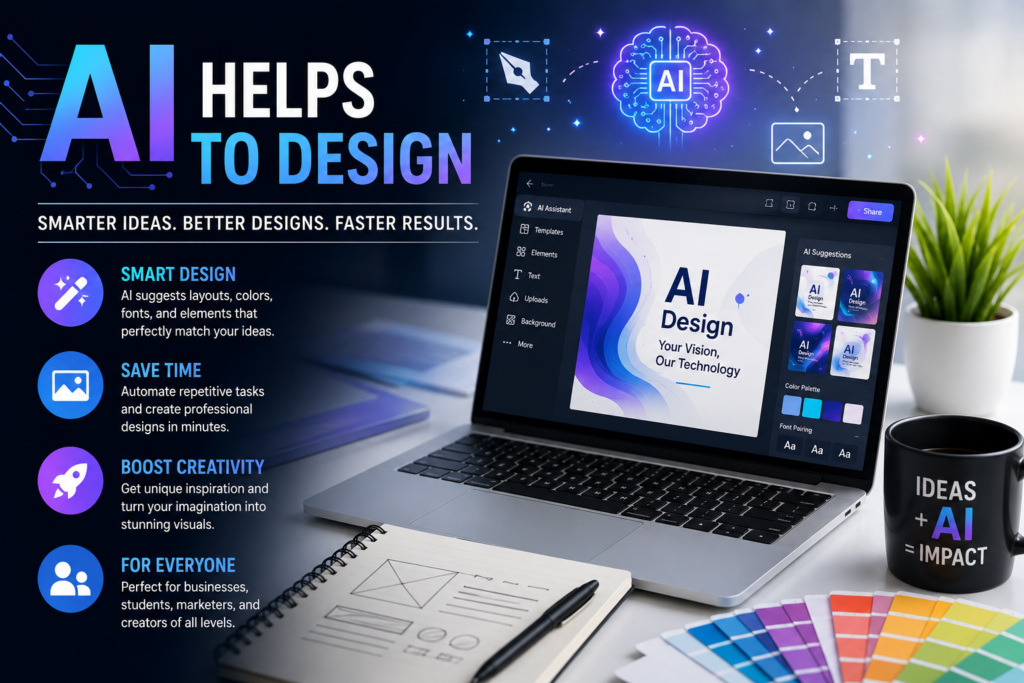
Artificial Intelligence (AI) is changing the way people design. From creating logos and social media posts to designing websites, presentations, and marketing materials, AI helps users save time while producing professional-quality work. Even those with little design experience can create stunning visuals using AI-powered tools.
AI can suggest layouts, generate unique images, recommend color combinations, and even write creative content for designs. Businesses use AI to build brand identities, create advertisements, and improve customer engagement. Designers also benefit by automating repetitive tasks, allowing them to focus more on creativity and innovation.
While AI makes the design process easier and faster, human creativity remains essential. The best results come from combining AI’s speed with human imagination and originality. As technology continues to evolve, AI will become an even more powerful partner in creating beautiful, impactful, and innovative designs.
Conclusion: AI is not replacing designers—it is empowering them to create better, faster, and smarter designs.
Creative Quote: “Design the future with creativity, powered by AI.”
Featured Image Prompt: A modern workspace with a laptop displaying an AI design interface, colorful design elements, a digital paintbrush, glowing AI circuits, 3D icons, blue and purple gradients, clean minimalist style, professional, futuristic, high resolution.
SEO Keywords: AI Design, Artificial Intelligence, Graphic Design, AI Design Tools, Creative Technology, Logo Design, Digital Design, AI Creativity
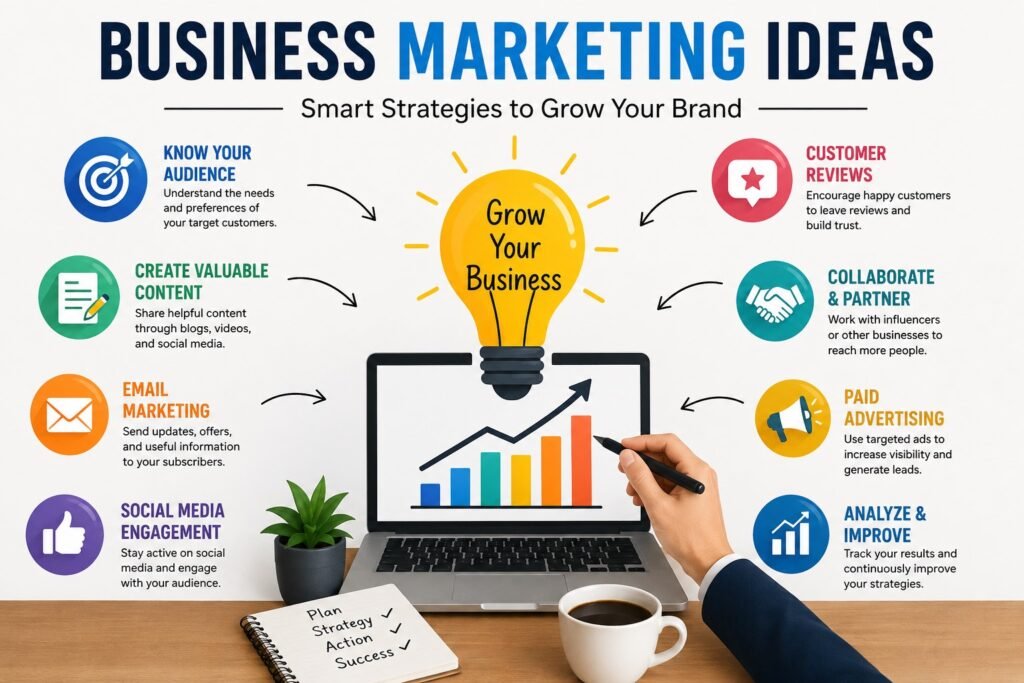
In today’s competitive market, successful businesses focus on building strong relationships with their customers. A clear brand identity, a professional website, and active social media accounts help create trust and increase visibility.
Content marketing is one of the most effective strategies. Publishing helpful blogs, videos, and social media posts keeps your audience engaged and positions your business as an industry expert. Email marketing is another powerful tool for sharing updates, special offers, and valuable information with existing customers.
Customer reviews and testimonials play a major role in attracting new buyers. Positive feedback builds credibility and encourages potential customers to choose your brand. Collaborating with influencers and local businesses can also expand your reach and introduce your products to new audiences.
Finally, track your marketing performance using analytics and continuously improve your strategies. With creativity, consistency, and a customer-first approach, any business can strengthen its brand, increase sales, and achieve long-term success